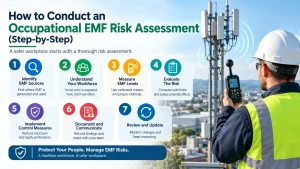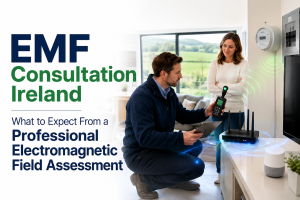
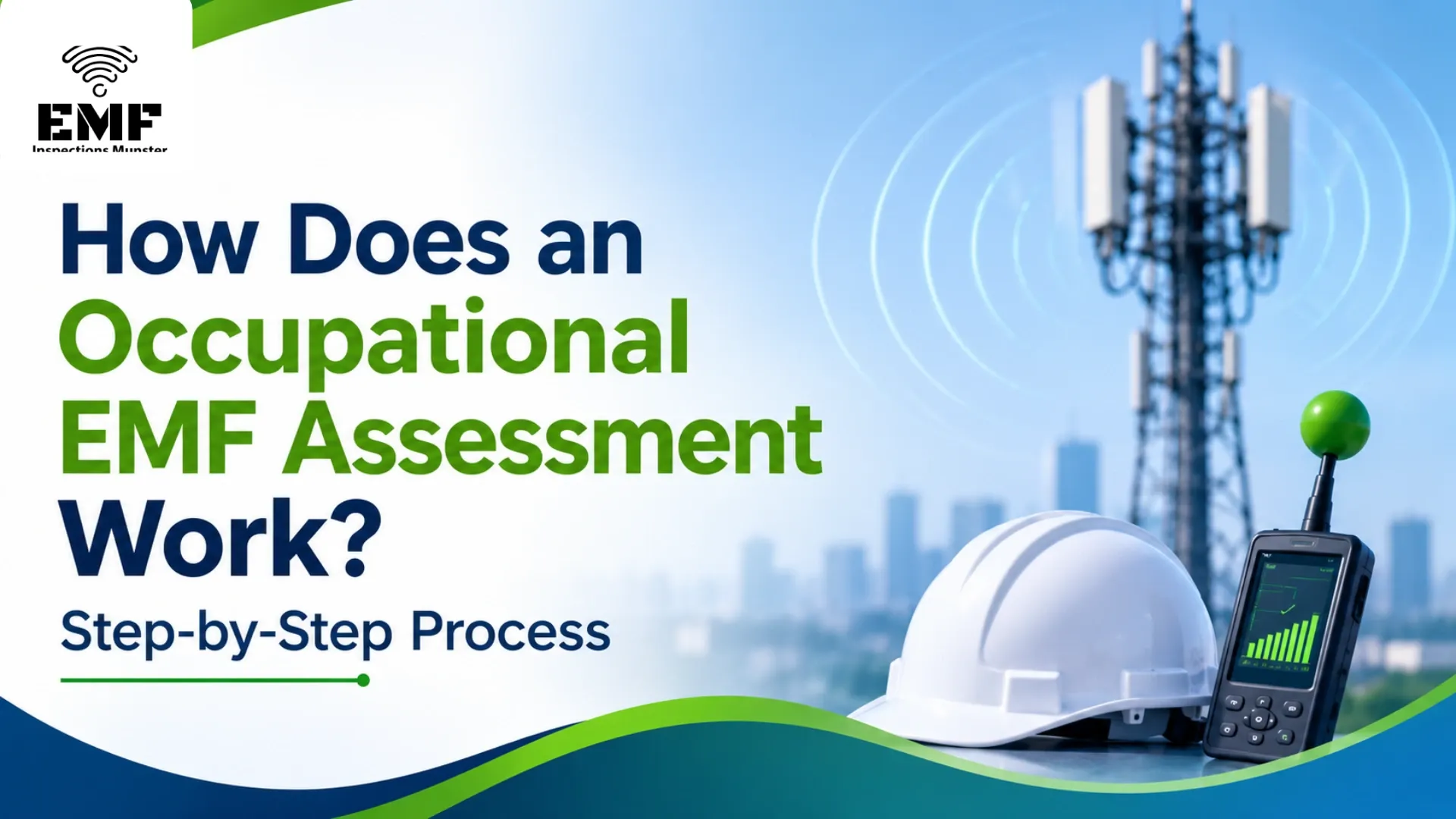
This type of workplace review identifies electromagnetic field (EMF) sources, measures exposure, and compares the results with safety limits. An expert then reports which areas are safe and which need action. The whole process protects workers who use or work near electrical and wireless equipment.
Table of Contents
ToggleWhat Is an Occupational EMF Assessment?
An occupational EMF assessment is a structured check of the electromagnetic fields workers face on the job. It looks at equipment such as welding machines, induction heaters, MRI scanners, radio transmitters, and high-voltage installations.
The goal is simple. The assessment confirms that no worker is exposed above the legal limits. In the EU, including Ireland, employers must manage this risk under Directive 2013/35/EU.
Why Do Workplaces Have EMFs?
Any equipment that carries or uses electricity creates EMFs. In most offices, levels are very low. In industrial sites, hospitals, and telecom facilities, levels can be much higher.
Benefits of a Workplace EMF Review
Here is what employers gain.
1. Legal compliance.
You meet your duty to assess and manage workplace risks. A written record also helps during inspections.
2. Safer workers.
The review shows which areas and tasks carry the highest exposure. You can then protect staff before a problem appears.
3. Protection for at-risk groups.
Workers with pacemakers, implants, or pregnancy may need extra care. The assessment flags these needs early.
4. Fewer disruptions.
Strong fields can interfere with medical devices and sensitive electronics. Finding the cause prevents downtime.
5. Clear, practical advice.
You get specific fixes such as barriers, warning signs, access limits, or changes to work routines.
6. Confidence for staff.
Workers feel safer when they see that the employer takes exposure seriously.
How the Process Works, Step by Step
Most assessments follow the same path. The details change with the size and type of workplace.
Step 1: Define the scope.
The assessor learns about your site, equipment, tasks, and staff. They also ask about any past concerns.
Step 2: List all EMF sources.
The team identifies every machine, cable, transmitter, and device that produces fields. Small items count too if workers stay close to them.
Step 3: Review existing data.
Equipment manuals and manufacturer data often include emission levels. This saves time and helps plan the measurements.
Step 4: Measure or calculate exposure.
Engineers use calibrated meters to take readings where people work. For complex setups, they use computer modelling. An occupational EMF assessment relies on accurate data at this stage, so good equipment matters.
Step 5: Compare results with the limits.
The team checks every reading against the exposure limit values and action levels. These limits cover both health effects and sensory effects, such as dizziness from strong magnetic fields.
Step 6: Identify workers at special risk.
Staff with medical implants or pregnant workers have lower safe levels. The assessor reviews these cases separately.
Step 7: Write the report.
You receive a document with methods, readings, findings, and a risk rating for each area.
Step 8: Apply controls and review.
You put the recommended measures in place. The assessor then repeats the checks if needed. Reviews should also follow any major equipment change.
Cost Details
Prices vary by country, site size, and the equipment involved. The figures below are general estimates only.
- Small office or low-risk workplace: about EUR 400 to EUR 900
- Standard industrial or healthcare site: about EUR 900 to EUR 2,500
- Large or high-power site with modelling: EUR 2,500 to EUR 6,000 or more
What Affects the Price?
- Number and type of EMF sources
- Size of the site and number of work areas
- Need for on-site measurement, modelling, or both
- Special risk groups among staff
- Report detail and follow-up visits
Each occupational EMF assessment is different, so ask for a written quote. Confirm what the fee covers before you agree.
Who Is It Best For?
This service suits many employers, including:
- Manufacturing and engineering firms
- Hospitals, clinics, and MRI departments
- Telecom and broadcast companies
- Utility and power transmission operators
- Welding, heating, and metalworking businesses
- Any employer with workers who use pacemakers or implants
Conclusion
An EMF review does not need to be complicated. It follows a clear path: find the sources, measure the fields, check the limits, and fix any problems. The result is a safer workplace and a clear record of compliance.
Do not wait for an incident or an inspection notice. Speak with a specialist and get your workplace checked. Visit our EMF Consultation Ireland page, or contact us today to book your assessment and receive a clear, practical report.
FAQs
1. Who must carry out the assessment?
The employer is responsible. Most employers hire a competent EMF specialist to do the measurements and write the report.
2. How long does the process take?
A small site usually takes one to two days, including the report. Large industrial sites take longer.
3. Is it a legal requirement?
In the EU, yes. Employers must assess and manage EMF risks under Directive 2013/35/EU. Check your national rules for details.
4. What equipment is measured?
Welders, induction heaters, power cables, transmitters, MRI scanners, and other electrical equipment that staff work near.
5. What happens if levels exceed the limits?
The employer must reduce exposure. Common fixes include barriers, access limits, shielding, and changes to work methods.
6. How often should it be repeated?
Repeat it after new equipment, layout changes, or when the previous review shows high levels. Many employers also review it every few years.
Need expert help? Reach out to our EMF Consultation Ireland team today.